
Ready Mix Concrete Delivery: Greater London & Essex
Premium BSI-Certified Volumetric & Ready Mix Concrete. Serving North, East, and parts of South East London with Same-Day Delivery.
For over 40 years, Mixit Ltd has been the go-to concrete pumping and delivery service for domestic DIY projects and major commercial developments alike. Operating from our strategically located depots in Edmonton (North London), Bow (East London), and Barking (Essex border), we deliver high-quality concrete mixed precisely to your engineer’s specifications.We use premium raw materials with zero recycled aggregates, ensuring maximum durability for structural foundations, extensions, driveways, and garden patios.
Call us now 0207 538 2266 to reserve a delivery slot.
Ready Mix Concrete:
The complete guide for residential projects
Readymix concrete is a pre‑mixed construction material manufactured in a controlled batching plant and delivered to construction sites in a fresh, workable state. Unlike site‑mixed concrete, where individual materials are combined manually or with small mixers on location, readymix concrete is produced under carefully regulated conditions to ensure consistent quality, strength, and performance. It has become the preferred concrete supply method for most modern construction projects, ranging from domestic driveways and house foundations to commercial buildings, infrastructure, and civil engineering works.
The widespread adoption of readymix concrete reflects the construction industry’s demand for reliability, efficiency, and predictable performance. By centralising the mixing process and delivering concrete ready for immediate use, readymix suppliers help improve build quality, reduce waste, and enhance overall site safety.

What Is Readymix Concrete?
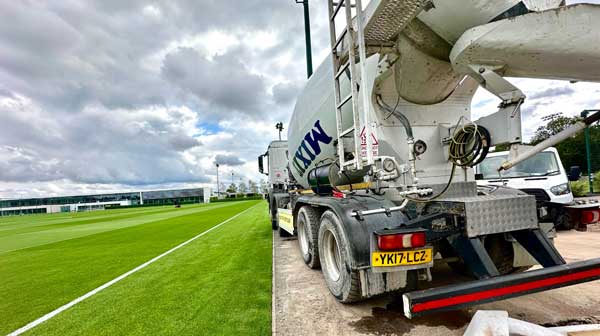
Readymix concrete is a mixture of cement, aggregates, water, and, where required, admixtures, proportioned and blended at a batching plant to a specified design. Once mixed, it is transported to the construction site in a truck mixer (commonly referred to as a concrete wagon or transit mixer), where it remains agitated to prevent segregation and premature setting until it is discharged.
The key distinguishing feature of readymix concrete is quality control. Every batch is produced in accordance with strict mix designs and industry standards, ensuring that the concrete supplied meets the required strength class, workability, durability, and exposure conditions. This approach removes much of the variability associated with site mixing, where inconsistent batching, poor material storage, or inexperienced operatives can compromise the final result.
Call us: 0207 538 2266




Materials Used in Readymix Concrete
Although readymix concrete is supplied as a single product, it consists of several essential components, each performing a specific role:
Cement
Cement acts as the binding agent that holds the concrete together. When mixed with water, it undergoes a chemical reaction known as hydration, forming a hardened matrix that binds the aggregates. Most readymix concrete uses Portland cement, although blended cements incorporating materials such as ground granulated blast furnace slag (GGBS) or pulverised fuel ash (PFA) are increasingly common for improved durability and sustainability.
Aggregates
Aggregates typically make up around 60–75% of the total concrete volume. They are divided into:
- Coarse aggregates, such as gravel or crushed stone, which provide bulk and strength.
- Fine aggregates, usually sand, which fill voids and contribute to workability.
The size, shape, and grading of aggregates significantly influence the concrete’s strength, finish, and ease of placement.
Water
Water activates the cement and allows the concrete to be mixed, placed, and compacted. The water‑cement ratio is critical: too much water weakens the concrete and increases shrinkage, while too little reduces workability and makes placement difficult.
Admixtures
Admixtures are added in small quantities to modify concrete performance. Common admixtures include plasticisers to improve workability, retarders to slow setting time, accelerators to speed up early strength gain, and air‑entraining agents to improve resistance to freeze–thaw cycles.
Production of Readymix Concrete
Readymix concrete (sometimes spelt: ready mix concrete) is produced in batching plants, which can be fixed (static) or mobile. The production process involves several controlled steps:
- Material storage – Cement is stored in sealed silos, aggregates in separate graded stockpiles, and admixtures in dedicated tanks.
- Weigh batching – Each component is measured accurately according to the approved mix design.
- Mixing – Materials are either mixed at the plant (central‑mixed concrete) or partially mixed and completed in the transit mixer (truck‑mixed concrete).
- Quality checks – Slump, temperature, and batch data are monitored to ensure compliance.
- Delivery – Concrete is transported to site and discharged within a specified time window to maintain workability and performance.
This controlled process ensures consistency across large volumes of concrete, which is especially important on projects requiring uniform quality throughout.
How to Calculate Volume Manually
Use: Length × Width × Depth = Cubic metres (m³)
Add 5–10% extra for:
- Uneven ground
- Spillage
- Formwork variation
- Minor overfill
Concrete suppliers usually charge much more for short-notice top‑up loads than for slight over-ordering.

Applications of Ready mix Concrete
Readymix concrete is used in virtually every sector of construction. Its versatility and reliability make it suitable for an extensive range of applications:
Domestic Construction
In residential projects, readymix concrete is commonly used for foundations, ground bearing slabs, driveways, patios, and garage floors. Homeowners benefit from consistent quality and faster construction times compared with traditional site mixing.
Commercial and Industrial Work
Commercial buildings, warehouses, and factories rely on readymix concrete for structural frames, floors, loading bays, and external hard standings. High‑performance mixes provide durability under heavy traffic and demanding conditions.
Infrastructure and Civil Engineering
Roads, bridges, drainage structures, retaining walls, and public paving frequently use readymix concrete to ensure longevity and compliance with strict specifications.
SOME KIND WORDS
Customer Reviews

Questions we are often asked about Ready Mix Concrete
To place an order, you have two options, by phone, or online.
To order by phone you can call Mix It on 0207 538 2266 with:
- Project address and access details
- Concrete type or strength required
- Quantity in cubic metres
- Preferred delivery date and time
Or you can use our concrete calculators to work out how much you need and order it online
We will handle the rest and guide you through the process.
Many suppliers offer lower‑carbon or eco‑concrete options, using recycled aggregates or reduced cement content. Ordering the correct amount also helps minimise waste and environmental impact.
- Too little: You may need a second delivery, which can be costly and affect finish quality
- Too much: Excess concrete may incur disposal charges
Accurate measurement and advice from your supplier can help avoid this.
We recommend you use our free concrete calculators to see how much you need.
Yes. Ready mix concrete is ideal for DIY projects, particularly where quality, speed and ease of use are important. It eliminates guesswork and reduces physical effort compared with hand mixing.
Yes we offer same‑day or next‑day deliveries, subject to availability and order cut‑off times. Early booking is recommended, especially during busy periods.
Ready mix concrete is generally more consistent and reliable than site‑mixed concrete because it is produced under controlled conditions. This makes it especially suitable for structural and load‑bearing applications.
Yes. Before delivery, you should ensure:
- Foundations, formwork and excavation are ready
- Access is clear for delivery vehicles or pumps
- Adequate labour and tools are in place
Good preparation helps avoid delays, wasted concrete and additional costs.
Yes, but weather conditions matter:
- In hot weather, concrete may set faster and need extra care
- In cold weather, setting slows and frost protection may be required
Suppliers can adjust mixes using admixtures to suit seasonal conditions.
Readymix concrete normally begins to set within 1.5 to 2 hours, depending on weather conditions and the mix design. Concrete should be placed, levelled and finished as soon as possible after delivery for best results.
Readymix concrete is typically delivered by:
- Drum mixer lorries, which discharge concrete directly
- Concrete pump, used when access is restricted or distances are long
You’ll need safe access for the vehicle and a clear plan for placing the concrete quickly on arrival.
Yes. We supply small load deliveries, which are ideal for domestic projects such as shed bases, garden paths or small patios. This avoids the cost and effort of mixing concrete yourself.
Concrete is measured in cubic metres (m³). To calculate the amount required, multiply: Length × Width × Depth (in metres)
It’s usually recommended to allow 5–10% extra for wastage and uneven ground. Suppliers can also help calculate volumes if you provide your dimensions.
The correct concrete depends on load requirements, exposure conditions and the application. For example:
- DC2 / DC3 for gardens, patios and paths
- C25 / C30 for foundations and slabs
- C35 / C40 for driveways or heavier loads
If you’re unsure, a concrete supplier can help you select the most suitable mix for your project.
Readymix concrete is suitable for a wide range of domestic and commercial applications, including:
- Driveways
- Foundations and footings
- House extensions
- Garage and shed bases
- Patios and garden paths
- Floors and slabs
Different concrete strengths and types are available depending on the use.
Readymix concrete is concrete that is batched at a concrete plant and delivered to site ready to use. It is mixed to specific proportions of cement, aggregates, water and, where required, admixtures, ensuring consistent quality and saving time on site compared with mixing by hand.
Covered locations

The leading concrete pumping and delivery service for domestic & commercial users in London. Supplying the exact amount of perfect concrete for your project, delivered quickly right to where you need it. – View our Greater London ready mix concrete delivery services.
Covering North London, East London, Essex
North London Depot
Address: 1 Thornton Rd, Edmonton London
Postcode: N18 3BA
View details for this depot
East London Depot
Address: Empson Street, Bow London
Postcode:E3 3LT
View details for this depot
Ilford Essex Depot
Address: 78 River road, Barking Essex
Postcode:IG11 0GS
View Details for this depot
